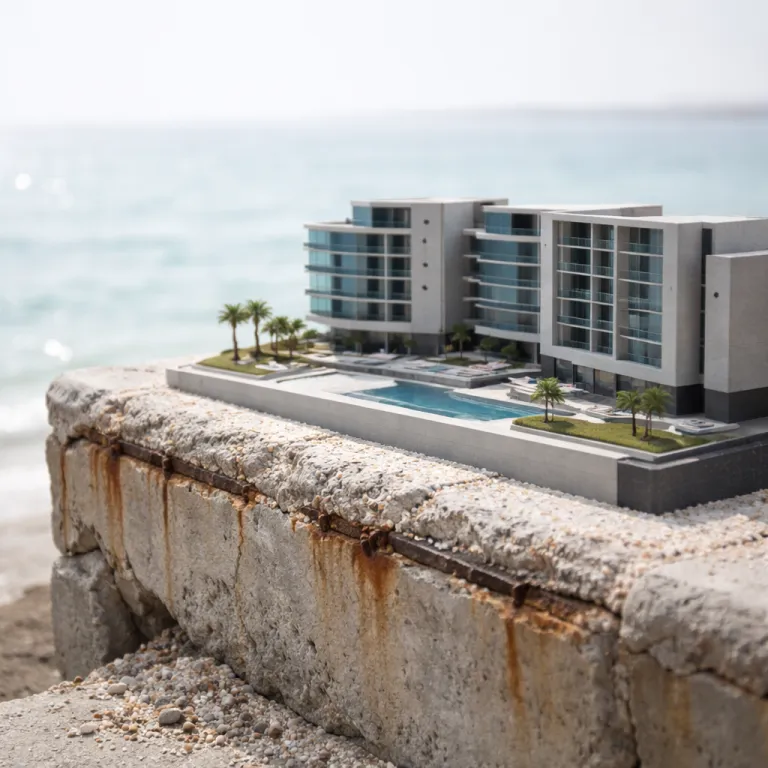
The Red Sea is a decade in motion, not a finished postcard
Red Sea luxury resorts now opening sit on a stretch of coast that spans roughly 28,000 km² of sea, islands and desert in northwestern Saudi Arabia. According to Red Sea Global’s official destination overview (accessed May 2026), the wider Red Sea development covers more than 90 islands and an extensive desert hinterland, yet on the ground the reality is a carefully staged rollout that will take most of this decade. For Saudi travelers used to polished Gulf destinations, this gap between glossy rendering and lived reality is the single most important thing to understand before booking.
The wider Red Sea tourism project, led by Red Sea Global as master developer, has always been about more than a few high-end hotels on a pretty lagoon. It is a long term coastal initiative that combines eco tourism, low-carbon operations and a new international airport near Al Wajh, designed to funnel high spending guests into a controlled reserve of 90 plus islands and sweeping dunes. Official communications from Red Sea Global between 2017 and 2024 have highlighted a core completion target around the mid 2020s for backbone infrastructure such as Red Sea International Airport and utilities, with resort openings continuing in phases beyond that date.
That timeline is best read as a milestone for enabling infrastructure rather than a promise that every sea resort and desert rock retreat will be ready. Earlier planning documents referenced a very large pipeline of hotels, but more recent Red Sea Global statements (for example, project updates published in 2023–2024) focus instead on an ultimate capacity of around 8,000 rooms across the destination, a scale designed to balance economic impact with environmental carrying capacity. Fewer properties across this vast area mean more space per guest, less pressure on fragile reefs and a better chance that service standards match the nightly rate.
For Saudi Arabia based travelers, this matters because Red Sea resorts are not a quick weekend bolt on to a Cairo or Egypt itinerary. They are a primary destination in their own right, with transfers through the dedicated Red Sea International Airport and boat hops to Shura Island or the Ummahat Islands archipelago. Treat the Red Sea not as a finished Riviera but as a living project in mid build, and expectations fall into place.
Right now, a small first wave of hotels is open or softly open across the archipelago, each designed as a self contained resort rather than a city stay. Some sit on Shura Island close to the main marina, others anchor more remote islands such as Sheybarah Island or the Ummahat Islands, and a few push inland into the desert at Southern Dunes and Desert Rock. The mix already includes global luxury flags like Nujuma, a Ritz-Carlton Reserve, and The Red Sea EDITION, with more international brands such as Four Seasons and Raffles waiting in the wings.
For a Saudi guest used to Riyadh or Jeddah towers, the first surprise is scale. These new coastal retreats are low rise, widely spaced and designed to vanish into dunes or coral outcrops, which means you move by buggy, boat or bike rather than elevator. The second surprise is silence; step outside your villa at dusk and you hear only the sea, the wind and the faint hum of generators running on renewable energy.
Red Sea Global positions the development as a model for sustainable tourism in Saudi Arabia, with renewable energy, waste management systems and strict reserve zoning baked into the master plan. For once, the sustainability story is not just a green flourish on a press release, because the entire coastal project would be undermined if reefs bleach or desert ecosystems are damaged. That environmental discipline is already visible in how access to certain islands is limited, how night lighting is controlled and how every resort is designed to keep guests on footpaths rather than trampling fragile dunes.
Where the renderings match reality and where they do not yet
Among the first wave of Red Sea luxury properties, Nujuma, a Ritz-Carlton Reserve, is the clearest case of a resort that earns its rate. Set on a private island within the Ummahat Islands cluster, this Nujuma Ritz-Carlton Reserve outpost brings the Reserve concept to Saudi Arabia with overwater villas, private pools and service that feels almost old school in its attention. When you are paying more than 11,000 SAR per night for a villa (sample checks on flexible dates in April 2026), you want more than marble; you want a sense that every detail has been designed around the sea, the red light at sunset and the desert horizon.
At Nujuma Ritz-Carlton Reserve, that design intent is obvious from the first boat ride across the Red Sea lagoon. Villas arc out over the water in a loose crescent, giving each deck a sense of privacy, while interiors lean into natural materials rather than glossy bling, and the result is a calm, almost meditative luxury. Staff to guest ratios are still high in this early phase, which means service feels anticipatory rather than reactive, and that is exactly where a Reserve level property should sit.
The Red Sea EDITION, sometimes shortened to the Sea EDITION in casual conversation, plays a different game, positioning itself as the lifestyle anchor of Shura Island. Industry coverage and hotel opening announcements through 2024–2025 have already highlighted The Red Sea EDITION as one of the most anticipated new hotels in the region, and the property leans into that global spotlight with a sharper, more urban energy than its neighbors. Here, the new Red Sea hotels start to feel like a bridge between Jeddah’s Corniche and a Mediterranean resort, with a social pool deck, strong F&B and a lobby that actually feels like a place to linger.
On Shura Island itself, the master plan clusters several luxury hotels around a marina, golf course and retail spine, which will eventually give Saudi guests a sense of choice within a single destination. Right now, though, the experience can feel slightly ahead of its time, with some plots still under construction and the full mix of restaurants and sea resort experiences not yet open. If you are the kind of traveler who enjoys seeing a project mid stride, with cranes on the horizon and staff eager to impress, Shura Island can be thrilling; if you want a fully mature Riviera, you may feel short changed.
Further inland, Southern Dunes and Desert Rock are the two bellwethers for how well these Red Sea developments can translate desert drama into genuine luxury. Southern Dunes, sometimes referenced as Senses Southern Dunes in early branding, spreads low slung tents and villas across a sandy basin, with Foster + Partners involved in aspects of the wider master planning. The experience here is about the desert itself rather than the sea, with guided hikes, stargazing and a silence that makes Riyadh feel very far away.
Desert Rock, carved into a rugged escarpment, is the more radical statement, with rooms literally embedded into stone and views that swing from dunes to jagged peaks. It is the kind of project that looks almost unreal in renderings, and early guests and preview visits in 2025–2026 report that reality comes surprisingly close, though some finishing details still feel like a work in progress. For now, I would place Southern Dunes in the “book now” column for Saudi Arabia based travelers who value landscape and privacy, and Desert Rock in the “wait a little” column until every trail, spa and restaurant is fully dialed in.
For a broader view of how these properties compare with established luxury hotels across Saudi Arabia, it is worth cross checking any Red Sea plan against an honest nationwide shortlist such as the one on Saudi luxury hotels curated with real on the ground reviews. When you see nightly rates at some Red Sea resorts approaching those of top tier Riyadh or AlUla properties, the question becomes simple. Does the combination of sea, desert and design genuinely outperform what you can already book elsewhere in the kingdom?
One more point on expectations; some early marketing has blurred the line between the Red Sea and other Saudi giga projects such as NEOM, which sit further north along the same coast. For now, treat the Red Sea as its own destination, anchored by Shura Island, the Ummahat Islands and a handful of desert enclaves, with its own international airport and its own rhythm. The NEOM narrative will eventually intersect, but that is another chapter.
Why scaling back the masterplan is good news for Saudi travelers
When the Red Sea project was first announced, the headline number of planned hotels sounded almost surreal. Dozens of luxury resorts, thousands of rooms and a string of islands from Shura Island to Sheybarah Island and beyond were all meant to light up in quick succession, and the phrase global ambition was thrown around with abandon. The reality, with the pipeline now framed around a more measured rollout and an 8,000 room target at full build out (a figure repeated in Red Sea Global fact sheets as of 2024), is far healthier for both the environment and the guest experience.
Fewer Red Sea resorts across this vast reserve mean that each property can command more space, more privacy and more flexibility in how it uses the surrounding sea and desert. For example, a single resort on Sheybarah Island can manage snorkel traffic to nearby reefs far more effectively than three competing properties, and that matters when coral health is a non negotiable pillar of the coastal project. The same logic applies to dune bashing, hiking and stargazing in the desert hinterland, where overuse would quickly erode the sense of untouched Arabia that planners are so keen to protect.
From a service perspective, the slowdown is also a blessing. Saudi Arabia is racing to train and attract enough qualified staff to run a new generation of luxury hotels, and concentrating that talent into fewer Red Sea properties means higher staff to guest ratios and better training continuity. Early adopters are already benefiting from this, with some guests at Nujuma Ritz-Carlton Reserve and The Red Sea EDITION reporting service levels that feel closer to a private yacht charter than a typical resort stay.
There is a counterargument, of course; early adopters always pay a premium and accept a few rough edges in exchange for bragging rights and extra attention. If you are the kind of traveler who enjoys being among the first to stay at a new sea resort, to walk an empty beach on the Ummahat Islands or to test drive a new spa ritual before it hits the brochure, this is your moment. Staff at these properties know that every Saudi guest is a potential ambassador, and the result is a level of personalization that may soften once occupancy rises.
For those who prefer their luxury fully baked, the smarter move is to treat the next 18 months as a scouting window. Use this period to understand which Red Sea hotels genuinely align with your travel style, whether that is the overwater calm of Nujuma Ritz-Carlton Reserve, the social energy of The Red Sea EDITION or the desert immersion of Southern Dunes. Then plan a more substantial stay once the full ecosystem of restaurants, wellness and experiences has matured.
One practical way to do this is to pair a short Red Sea stay with a more established Saudi destination, using tools like specialist guides to luxury accommodation booking in Saudi Arabia to benchmark value. Spend two or three nights at a Red Sea resort, then connect through the Red Sea International Airport to Riyadh, Jeddah or AlUla for a contrasting city or heritage experience. This approach lets you enjoy the thrill of a new project without staking your entire holiday on an ecosystem that is still forming.
Environmentally, the scaled back plan also gives the reserve breathing room. With only a fraction of the 90 plus islands being developed, and strict zoning around the most sensitive reefs and mangroves, the Red Sea has a fighting chance of remaining a pristine destination rather than another overbuilt strip. For Saudi travelers who care about leaving something intact for the next generation, that restraint is part of the luxury.
How to book the Red Sea wisely over the next 18 months
For Saudi based travelers looking at Red Sea resorts between now and roughly the next year and a half, the strategy should be selective rather than scattershot. Start by deciding whether you are a sea person, a desert person or someone who wants both in a single itinerary, because the geography of this destination is not just marketing poetry. The difference between waking up over the sea at Nujuma Ritz-Carlton Reserve and waking up among the rocks at Desert Rock is profound.
If budget allows, Nujuma Ritz-Carlton Reserve is the clearest “book now” recommendation. The combination of overwater villas, attentive service and a genuine sense of reserve level privacy justifies the rate in a way that some other coastal projects do not yet manage, and the setting within the Ummahat Islands archipelago feels genuinely remote. For travelers who want a more social scene, The Red Sea EDITION on Shura Island is also worth considering in the near term, especially once more of the island’s restaurants and experiences are fully open.
By contrast, I would be inclined to wait on at least two categories of property until closer to 2027. First, any large scale family oriented resort on Shura Island that depends heavily on a fully built out marina, retail spine and shared attractions will feel incomplete until the wider project matures, and that is simply the nature of a phased development. Second, inland properties like Desert Rock that rely on a complex network of trails, viewpoints and desert experiences will only reach their full potential once every element has been tested, refined and integrated.
For families or groups used to urban stays, it can be helpful to think of these Red Sea hotels in the same way you might approach a new waterfront district in another country. You would not necessarily book a full week in a brand new precinct without checking how many restaurants are actually trading, how easy transfers are from the airport and whether the promised kids’ facilities are open, and the same logic applies here. Resources like detailed reviews of family friendly luxury stays in other global cities can sharpen your eye for what “finished” really looks like.
On the practical side, the dedicated Red Sea International Airport near Al Wajh is the main gateway for both Saudi and international guests. As more routes open, expect easier connections from Riyadh, Jeddah and potentially from Egypt and other regional hubs, which will make short stays more viable for Saudi Arabia based travelers. Until then, factor in transfer time and cost when comparing a Red Sea stay with a more straightforward city break.
To ground expectations, assume that a one way transfer from the airport to a nearby island or desert resort will typically involve a short road leg followed by a scheduled boat or buggy transfer arranged by the hotel, with total journey times often running 45 to 90 minutes door to door. Nightly rates at the top tier properties already open can range from high four figures in SAR at quieter times to well above 10,000 SAR during peak periods (rate checks as of Q2 2026), reflecting both the remote logistics and the intentionally low room count.
Finally, remember that these Red Sea developments are part of a broader shift in Saudi tourism, one that aims to diversify the economy beyond oil while preserving key natural assets. For guests, that means accepting a few imperfections in exchange for being part of a genuinely new chapter in Arabian travel, rather than just another polished resort strip. Choose your property carefully, calibrate your expectations and the Red Sea can already deliver moments that feel quietly extraordinary.
Key figures shaping the Red Sea luxury landscape
- The Red Sea development zone covers around 28,000 km² of land and sea in northwestern Saudi Arabia, according to Red Sea Global project summaries published between 2017 and 2024, making it one of the largest single luxury tourism projects on the planet.
- More than 90 islands sit within the Red Sea reserve area, but only a limited number will host resorts, a deliberate strategy to protect marine ecosystems while still supporting high end tourism.
- The masterplan currently targets around 8,000 hotel rooms at full build out, a scale designed to balance economic impact with environmental carrying capacity across sea, desert and island environments, and repeated in Red Sea Global fact sheets accessed in 2024–2025.
- Official planning documents describe the Red Sea initiative as “a Saudi initiative to develop luxury tourism along the Red Sea coast”, underlining its role in diversifying the national economy beyond oil.
- Project timelines shared by Red Sea Global outline a phased rollout from initial construction through to core completion around the mid decade mark, with infrastructure such as the dedicated international airport and utilities front loaded to support later resort openings.