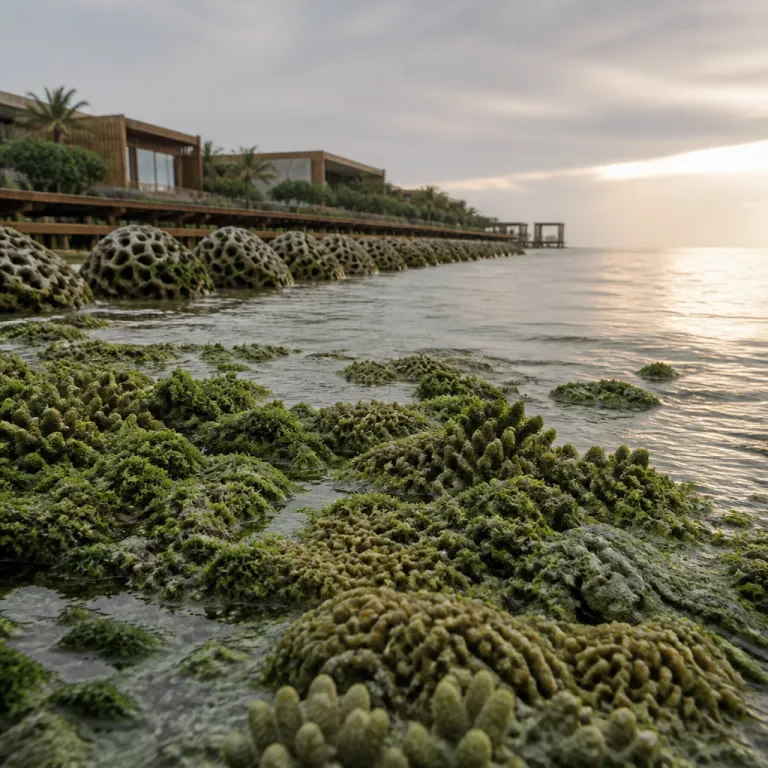
Red Sea resort conservation as a shared neighborhood pact
Red Sea resort conservation starts with a simple truth: every property shares the same sea and the same reef. Along the western coast of Saudi Arabia, ultra-luxury developments now rise beside mangroves and coral reefs, turning each new hotel project into a long-term test of whether regenerative tourism can genuinely protect this marine environment. For a solo traveler choosing a luxury destination in Saudi Arabia, the question is no longer only about private pools and butler service, but about how each resort treats its coral neighbors and the surrounding marine ecosystems.
Red Sea Global (RSG), the main developer behind this coastal destination, has framed its Red Sea project as a model for sustainable development in high-end tourism. The company’s Coral Commitment is explicit: “A pledge to protect and regenerate Red Sea corals.” That promise sits alongside published environmental data in RSG’s sustainability reports, which describe large-scale mangrove planting and extensive coral relocation programs, signaling that conservation efforts are not just a marketing line for global audiences curious about Saudi Arabia. Recent disclosures reference more than 50 million mangroves targeted by 2030, over 300,000 coral fragments relocated during early construction phases, and a 100% renewable energy goal for the first phase of island resorts.
For travelers comparing resorts across Saudi Arabia and nearby Egypt, the Red Sea increasingly reads like a shared marine conservation laboratory rather than a string of isolated properties. Each hotel draws on the same marine environment, the same coastline, and the same fragile coral reefs, so conservation failures at one destination quickly become everyone’s problem. When you book through a luxury-focused platform such as mysaudiarabiastay.com, you are effectively choosing which conservation model you want to fund with your guest experience. As one independent marine ecologist who has advised regional projects put it, “On a connected reef system, there is no such thing as a private impact; every anchor, every wastewater pipe, every light on the shoreline is felt up and down the coast.”
Renewable energy and the real meaning of regenerative tourism
Energy is where Red Sea resort conservation moves from aspiration to measurable practice. The flagship resorts along this stretch of sea are designed to be powered entirely by renewable energy, a rare standard in global luxury tourism and a significant shift from diesel-dependent coastal properties in Egypt or other parts of Arabia. RSG has announced a utility-scale off-grid system of roughly 400–500 MW of solar and battery storage to serve its first destinations, replacing tens of millions of liters of diesel over the project’s lifetime. For an environmentally minded guest, that means every chilled suite, every desalinated shower, and every late-night room service run carries a smaller footprint on both marine and terrestrial ecosystems and the wider climate.
Regenerative tourism goes further than classic sustainable tourism by aiming to leave the marine environment better than it was before development. At the Red Sea, that ambition shows up in solar-powered infrastructure, low-impact coastal logistics, and strict caps on overall development density to protect coral reef systems. RSG has publicly committed to designating around 75% of its island archipelago as conservation or no-build zones and to limiting development to less than 1% of the total project area, with visitor numbers capped to keep the destination net conservation-positive. When you read about a Red Sea project promising net conservation-positive outcomes, ask how many megawatts of renewable energy are installed, how environmental monitoring data is shared, and whether independent actors such as REEF or CORDAP are involved in marine conservation planning or research.
Transparency is the next frontier, and it matters as much as technology. Some resorts and developers now publish high-level environmental performance data and carbon accounting, a trend explored in depth in this analysis of how Saudi resorts measure their environmental footprint. RSG’s annual sustainability reports, for example, outline baseline reef surveys, seagrass mapping, and modeled scenarios for fish biomass recovery under different protection levels. Independent assurance statements and third-party verifications increasingly accompany these reports, giving travelers more confidence that claims are evidence-based. As more ultra-luxury properties open along this Red Sea coastline, the travelers who ask for clear data on energy, water, and reef health will help set the standard for Saudi Arabia as a serious conservation destination rather than a late entrant to global coastal development.
Coral nurseries, turtles and what guests actually see
The most visible side of Red Sea resort conservation appears underwater, where coral nurseries and turtle monitoring programs turn abstract commitments into living color. Hotels working with partners such as REEF and CORDAP now maintain coral restoration sites close to the main reef, where fragments from stressed coral colonies are grown on frames before being replanted on the natural reef structure. Early project updates from the wider Red Sea destination reference tens of thousands of coral fragments stabilized on nursery structures and survival rates above 80% in some pilot sites. For guests, these marine conservation zones can feel like open-air laboratories, with guided snorkeling that explains how each coral colony supports fish, invertebrates, and the wider marine ecosystems.
Behind the scenes, marine biologists track turtle nesting on quiet stretches of coastline and monitor how light pollution from new development affects their behavior. Some properties limit night-time beach access during nesting season, a small but telling example of conservation efforts that directly shape the guest experience in Saudi Arabia. As one Red Sea-based marine scientist noted in a recent stakeholder workshop, “Every light we dim and every beach we close at the right time of year gives hatchlings a better chance of reaching the water.” When a resort explains why certain coastal paths are closed or why boats must follow specific channels across the Red Sea lagoon, it is usually protecting both the marine environment and the long-term health of the destination.
Design choices also speak loudly. Shebara, for instance, uses overwater villas whose forms mirror the sea and sky, an architectural gesture that only works if the underlying marine environment remains healthy and clear. Official design materials describe prefabricated, lightweight structures, careful piling placement, and elevated walkways to reduce direct contact with sensitive habitats, with construction logistics planned to avoid key spawning and nesting periods. In-room storytelling, from dive center briefings to bathroom amenity cards, now links luxury rituals such as an elevated bathing experience to the water-saving technologies and reef-safe products that keep this shared reef neighborhood viable; you can see that connection explored through the lens of how bathtubs define luxury in Saudi hotels.
How to read beyond green marketing when booking
For solo travelers using a premium booking website focused on Saudi Arabia, the challenge is separating genuine Red Sea resort conservation from polished brochure language. Start with location: a resort built directly on a sensitive reef flat or in a turtle nesting corridor faces a higher environmental burden than one set slightly inland with carefully managed access to the sea. Ask whether the property participates in a wider Red Sea Global framework, such as Red Sea Global’s Coral Commitment, or whether its conservation narrative stops at generic references to sustainable tourism.
Next, look for concrete marine conservation actions rather than vague environmental promises. Does the hotel support coral restoration with named partners, publish data on coral reef health, or engage local communities in coastal monitoring and cultural heritage programs linked to the sea? A serious property will be able to explain how its development footprint is balanced by specific regenerative tourism projects, from mangrove planting to marine and terrestrial habitat restoration, and how those projects are audited or reviewed over the long term. RSG’s own reporting, for instance, highlights multi-year monitoring of fish biomass, coral cover, and water quality, with peer-reviewed studies on Red Sea reef resilience frequently cited as the scientific basis for zoning and visitor limits.
Price can be a signal, but not always in the way you expect. Resorts that cap guest numbers to protect the reef often rely on higher nightly rates to fund renewable energy systems, marine environment research, and staff training, a dynamic explored in this guide to commissionable rate strategies in Saudi luxury hotels. RSG has indicated that, at full build-out, annual visitor numbers will be held well below those of comparable global beach destinations, with some islands limited to a few hundred guests at any one time to keep reef carrying capacity in balance. When a property in Saudi Arabia positions itself as ultra-luxury yet cannot answer basic questions about its Red Sea project, coral reefs, or conservation efforts, it is usually selling a view of the Red Sea rather than a relationship with it.
Your role as a guest in a shared reef system
Red Sea resort conservation ultimately depends on how guests behave once they arrive, not just on how developers design the project. Simple choices such as using reef-safe sunscreen, respecting no-touch policies on the reef, and keeping a respectful distance from turtles directly influence the health of this shared marine environment. When you treat the Red Sea as a living neighbor rather than a backdrop, your stay in Saudi Arabia becomes part of a wider story of regenerative tourism instead of another line in global tourism statistics.
Education works best when it feels like an invitation, not a lecture. The most thoughtful properties weave guidance into the guest experience, from pre-arrival emails explaining marine ecosystems to on-board briefings before snorkeling that outline how to move over coral reefs without contact. Many now echo the same core advice: respect marine life, use reef-safe sunscreen, and follow local guidelines, turning every boat trip into a small training session in practical marine conservation. Some Red Sea operators also share simple metrics with guests, such as the percentage of excursions led by trained marine guides or the number of reef monitoring dives completed each season, making it easier to see how individual behavior scales up to destination-wide impact.
The carrying capacity question remains unresolved, and travelers should keep asking it. As more luxury and ultra-luxury rooms open along this coastline, the balance between fewer visitors paying more and mass tourism pressure will define whether this destination stays net conservation-positive over the long term. Your booking choices, your questions at check-in, and your behavior in the water all help signal to both Saudi and global operators that conservation is not a niche preference but a baseline expectation for any serious coastal development in Arabia.
FAQ
What is Red Sea Global's Coral Commitment ?
Red Sea Global's Coral Commitment is a formal pledge to protect and regenerate Red Sea corals through targeted marine conservation programs. It underpins the wider Red Sea resort conservation strategy, linking every new development to measurable outcomes for coral reef health. RSG’s public sustainability updates describe actions such as coral relocation, long-term monitoring, and strict development limits. For travelers, this means that participating resorts are expected to support coral restoration, scientific surveys, and long-term ecosystem management rather than treating the reef as a passive attraction.
How do Red Sea hotels contribute to coral conservation ?
Red Sea hotels contribute to coral conservation by funding and hosting coral nurseries, supporting scientific monitoring, and adapting their operations to reduce pressure on the marine environment. Many properties work with partners such as REEF, CORDAP, and local dive operators to rescue and relocate coral fragments from construction zones to safer reef areas, as documented in project updates and environmental impact assessments. Guests often see the results through guided snorkeling tours, educational displays, and opportunities to observe restoration work from a respectful distance.
What is unique about Shebara Resort's design ?
Shebara Resort stands out for its overwater villas whose architecture mirrors the surrounding sea and sky, creating a visual dialogue with the Red Sea landscape. Official design materials emphasize lightweight structures, careful piling placement, and elevated walkways to reduce direct contact with sensitive habitats. This design relies on clear water and healthy marine ecosystems beneath the structures, which raises the stakes for rigorous conservation efforts. The resort’s approach illustrates how ultra-luxury aesthetics and environmental responsibility must align when building directly above coral habitats.
How can guests minimize their impact on the reef during their stay ?
Guests can minimize their impact by choosing reef-safe sunscreen, avoiding any contact with coral, and following all snorkeling or diving briefings carefully. Staying within marked channels, never feeding fish, and keeping a respectful distance from turtles and other wildlife all help protect fragile marine ecosystems. Asking the hotel about its conservation programs and supporting excursions that fund local communities and scientific work further strengthens Red Sea resort conservation and encourages operators to maintain high environmental standards.
What should I ask a resort before booking a Red Sea stay ?
Before booking, ask how the resort powers its operations, whether it participates in coral restoration, and how it limits visitor numbers to protect the reef. Request information on environmental monitoring, partnerships with recognized marine conservation organizations, and any published data on coral reef health or independent audits of sustainability claims. A property that answers clearly and specifically is far more likely to treat its coral neighbors as long-term partners rather than short-term scenery.